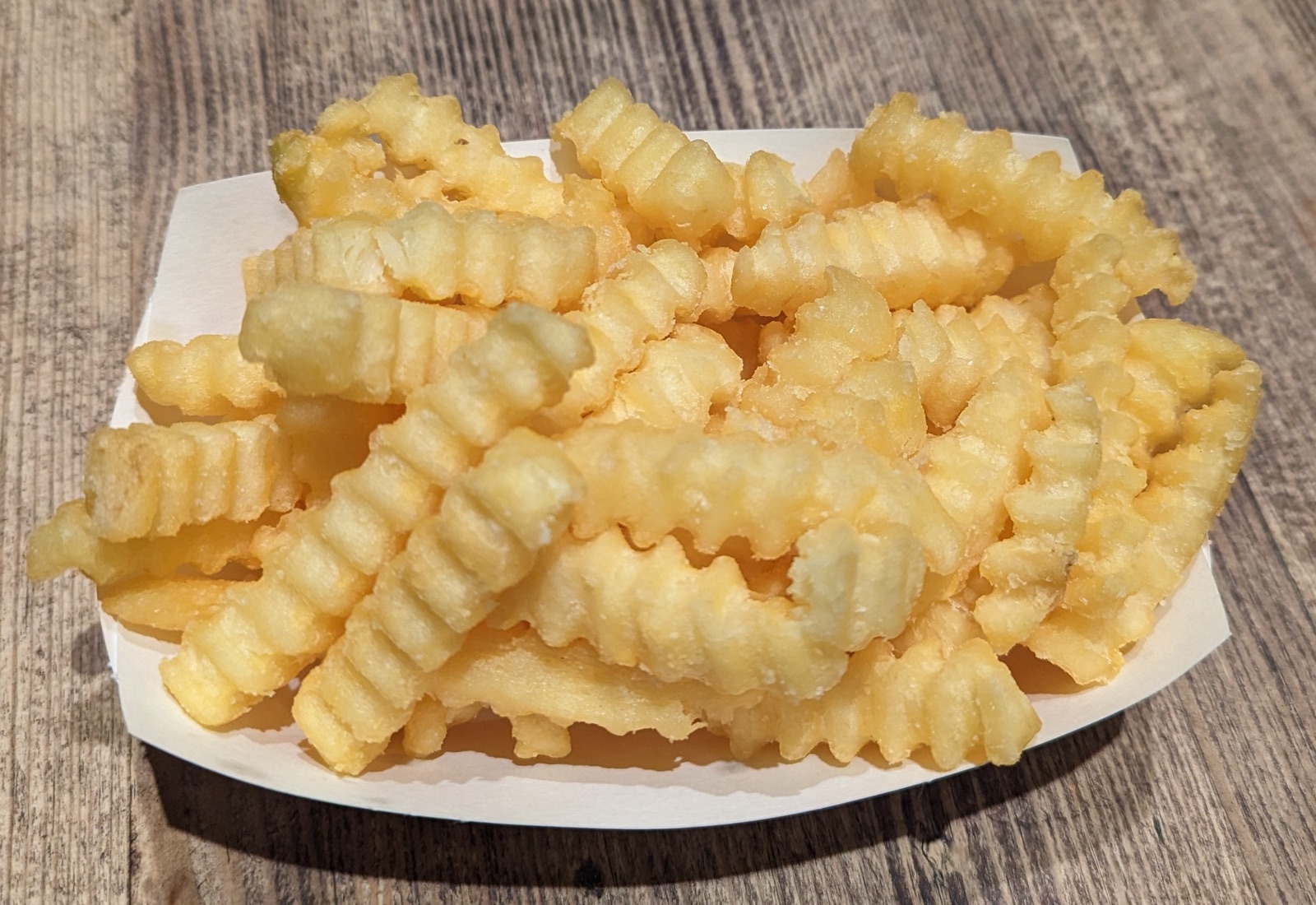
French fries look simple because the ingredient list can be short. The process is not. A raw potato contains water and starch. Good frying must cook the interior until tender while creating a dry, browned exterior strong enough to remain distinct for a useful period. Restaurants may rinse, soak, blanch, freeze, par-cook or coat fries to manage that transformation. The customer sees the final cut, but the hidden preparation often matters more.
Cut shape changes the ratio
A thin shoestring fry offers a high proportion of crisp surface and little fluffy center. It cooks quickly, cools quickly and can become brittle or limp with small changes in timing. A thicker straight cut has more interior potato and retains heat longer, but needs careful cooking to avoid a hard shell around a dense center.
Crinkle cuts add ridges, increasing visible surface area and creating varied thickness across each piece. The valleys can hold salt and sauce. Waffle cuts push the surface idea further; wedges emphasize the soft center. None of these shapes guarantees quality. They describe the target ratio and tell you what kind of failure to watch for.
Crispness requires water to move
During frying, heat drives water from the outer potato and replaces some of that space with oil. The surface sets and browns while steam cooks the interior. If too many cold fries enter the fryer at once, oil temperature can drop. If fries wait after cooking, internal moisture migrates outward and environmental humidity moves in.
That is why fries are unusually sensitive to batching. A perfect cook held under the wrong conditions can arrive soft. A fresh batch served immediately may outperform a technically more elaborate fry that waited for the rest of a large order.
Salt works best while the surface is receptive
Fine salt adheres to a hot, lightly oily surface. Uneven seasoning can leave some fries bland and others harsh. Seasoning blends add flavor but may also add sugar, fine powders or allergens. If sodium, an allergy or a particular diet matters, consult current restaurant information and ask whether an unseasoned batch is possible. Availability and shared preparation vary.
Sauces create a deliberate trade: more flavor, less dry surface. Dip one bite at a time rather than pouring sauce over the whole serving if crispness matters. Cheese sauce and loaded toppings turn fries into a different dish whose value is richness, not long-lasting crunch.
Packaging traps the enemy
Hot fries release vapor. A tightly closed container retains heat but also raises humidity. Vented paper packaging lets more moisture escape, though it can cool faster. When fries share a bag with a hot burger, the total steam load increases. When a cold shake sits beside them, temperature conflict adds another problem.
For carryout, arrive close to the ready time and drive directly. Avoid tying a plastic bag tightly around already enclosed fries. For delivery, choose a nearby restaurant, be ready for the handoff and accept that the side may arrive softer than at the counter. An app's maximum delivery radius is not a texture guarantee.
Should you order fries for a long trip?
Use a simple decision:
- Eat on site: fries are at their strongest and can remain central to the meal.
- Short carryout: order them, keep packaging upright and serve immediately.
- Moderate delivery: order a smaller portion if the group wants the flavor but set realistic expectations.
- Long or delayed route: consider another side or plan to reheat promptly and safely.
A restaurant may offer a preparation designed to travel better, but no coating can fully suspend time.
Reheating favors dry contact heat
A microwave warms water quickly and usually makes fries soft. A hot oven, air fryer or skillet can drive off surface moisture and restore some texture. Spread fries rather than piling them, monitor closely and avoid adding more oil automatically. Equipment and fry coatings behave differently.
Refrigerate leftovers promptly and follow current USDA food-safety guidance. Do not use smell or appearance as the only safety test, and do not leave fries at room temperature simply because they contain no visible meat.
Fries reward honesty about the route. Choose the cut for the ratio you enjoy, the restaurant for fresh production and the channel for the shortest realistic trip. Then eat the side first if its crunch matters more than tradition says it should.