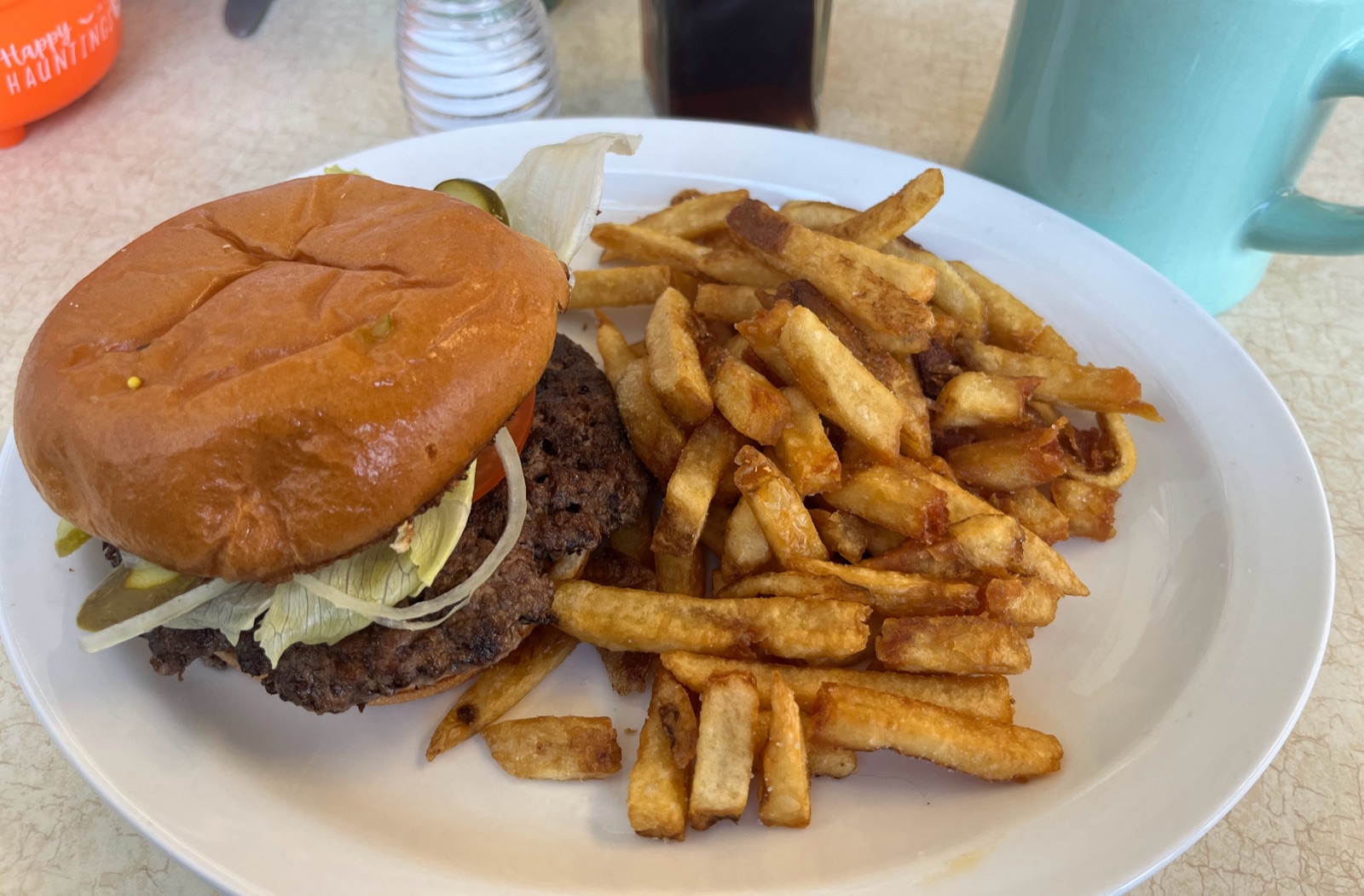
“Smash” describes a moment at the beginning of cooking. A portion of ground beef lands on a hot, solid griddle and is pressed firmly into a thin disk. That pressure increases the area touching metal, pushes the edges outward and helps the surface brown quickly. Once contact is established, repeated pressing is unnecessary and can work against juiciness. The useful question is not how dramatic the press looks, but whether the kitchen creates an even sear and lifts the developed crust cleanly from the flat top.
Contact is the defining variable
Grill bars touch only part of a patty. A flat top can contact nearly the full underside, transferring heat across a broad surface. When meat proteins and natural sugars meet sufficient heat in a relatively dry environment, they develop the roasted, savory flavors associated with browning. A cold or crowded griddle may steam the meat instead. An overheated surface can blacken the edge before the rest of the patty cooks appropriately.
The patty's ragged perimeter matters because it creates thin extensions with additional surface area. Those lacy edges become crisp and intensely browned. A perfect factory circle may be tidy, but a slightly irregular silhouette often reveals the method more clearly.
Why doubles are common
One thin patty maximizes crust relative to meat. Two patties increase total beef and create another set of browned surfaces while preserving the fast-cooking format. Cheese between the patties can melt against hot meat and help the stack behave as one unit. A double is therefore not simply a larger single: it shifts the ratio toward meat, salt, fat and browned flavor.
Choose a single when you want the bun, vegetables and sauce to stay prominent or when fries and a shake complete the meal. Choose a double when the patty should dominate. Adding bacon, extra cheese and a heavy sauce to a double can erase contrast; make every addition defend its place.
The scrape is part of the cook
A browned crust adheres to the cooking surface. The cook needs a firm, thin-edged spatula to get underneath it without leaving the flavorful layer behind. A pale, patchy underside may reflect weak contact or insufficient heat. A badly torn patty may indicate that the crust was not released cleanly. Customers will not watch every step, but the finished edge and underside show the result.
Cheese is usually added while the patty is still hot enough to soften it quickly. Highly meltable sliced cheese works well because it drapes over thin, uneven edges and joins stacked patties. Different cheeses can be delicious, but a thick or slow-melting slice may remain separate from a fast-cooked patty.
What the bun has to do
A smash burger carries concentrated fat and hot cheese. The bun needs enough tenderness to compress around the thin stack, but enough integrity to resist sauce and meat juices. Toasting creates a drier inner surface and a little structural resistance. A large, crusty roll can overpower the thin patties; a fragile bun can dissolve before the final bite.
Look at diameter as well as height. Patty edges should not disappear far inside the bread. Overhang is not a quality requirement, but a close patty-to-bun footprint keeps each bite consistent.
Order toppings for cut and control
- Pickles: add acid, salt and a firm snap that interrupts the rich surface.
- Onions: raw onion is sharp and crisp; cooked onion is sweeter, softer and wetter.
- Lettuce and tomato: add freshness but also height and moisture. Their position affects stability.
- Sauce: lubricates and seasons, but too much increases sliding and conceals the crust.
A simple burger is a revealing first order at an unfamiliar counter. Patty, cheese, pickles or onion and a modest sauce let you evaluate the sear and bun. A complex specialty burger may be enjoyable, but it gives less information about the base process.
Travel is hard on the edge
The crisp fringe begins absorbing moisture after the burger is wrapped. Hot meat, cheese, sauce and vegetables create steam; an enclosed bag holds it. Delivery may still be the right convenience decision, but a nearby restaurant and prompt handoff matter. For maximum contrast, eat on site or carry out over a short route.
Do not attempt to “restore” a fully assembled burger in its wrapper or packaging. If you save leftovers, refrigerate promptly and follow current government food-safety guidance. Reheating will change the vegetables, sauce and bun even when the patty becomes hot again.
A smash burger succeeds by committing to its format: thin beef, complete griddle contact, aggressive browning, a fast melt and a compact stack. Judge it by those choices rather than asking it to imitate the rosy center of a thick pub burger.